Hi there 👋
I’m a backend engineer building highly scalable distributed systems. I write about system design, databases, infrastructure, deep learning, and inference engineering.
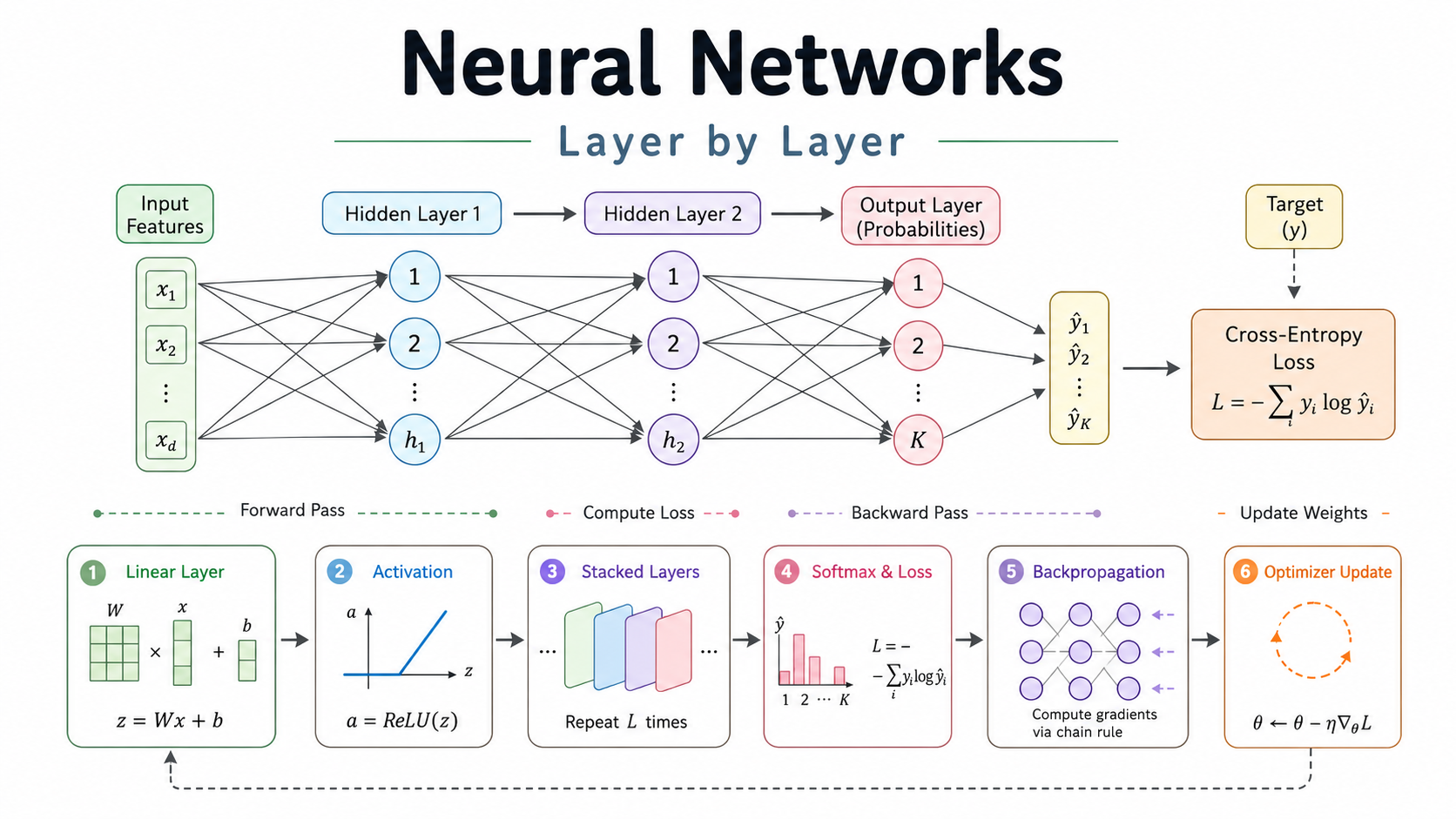
A neural network is a chain of functions. Each layer takes a tensor in, does one simple mathematical operation, and passes a tensor out. There’s no magic in it. It’s linear algebra, a nonlinearity, and calculus, repeated. Here’s the chain in the order data actually flows through it: forward pass first, then how it learns. Every equation gets paired with its exact PyTorch equivalent, so you can see where the math actually lives in code. ...
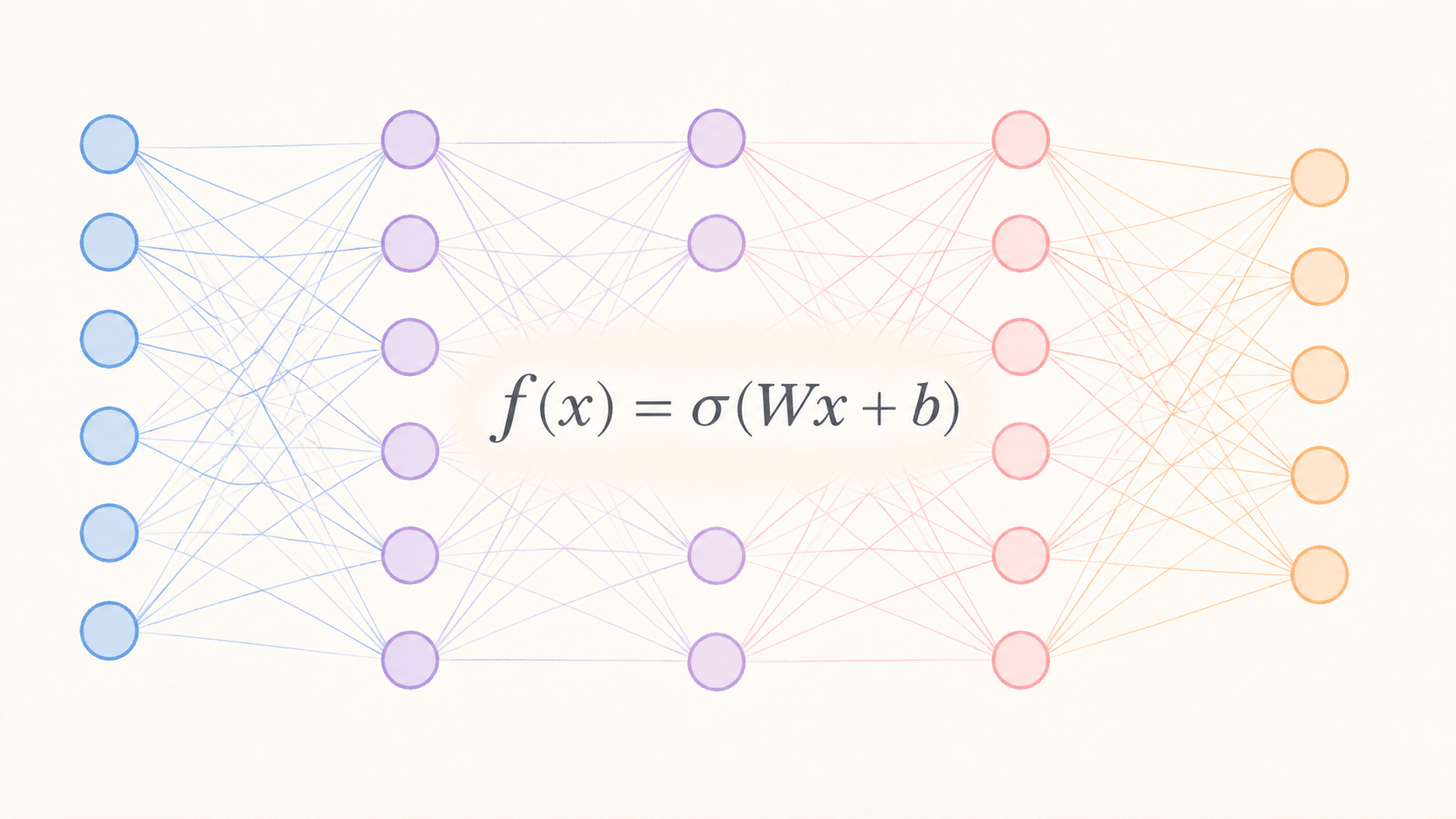
Most neural-network explanations start with math. That’s honest. But the ideas stick when you’ve actually broken something. Each section below is a live demo: click Run, watch it train, change a control, run it again. Activations exist for a reason Depth without nonlinearity is a lie Embeddings learn similarity from next-token alone Memorization vs generalization 1. Activations exist for a reason A linear model and a ReLU model, side by side, trying to separate a red ring from a blue one. The linear model can’t draw a curved boundary no matter how long it trains. Without a nonlinear activation, a stack of layers collapses to one matrix multiply. The curved shape you need is impossible to express. ...
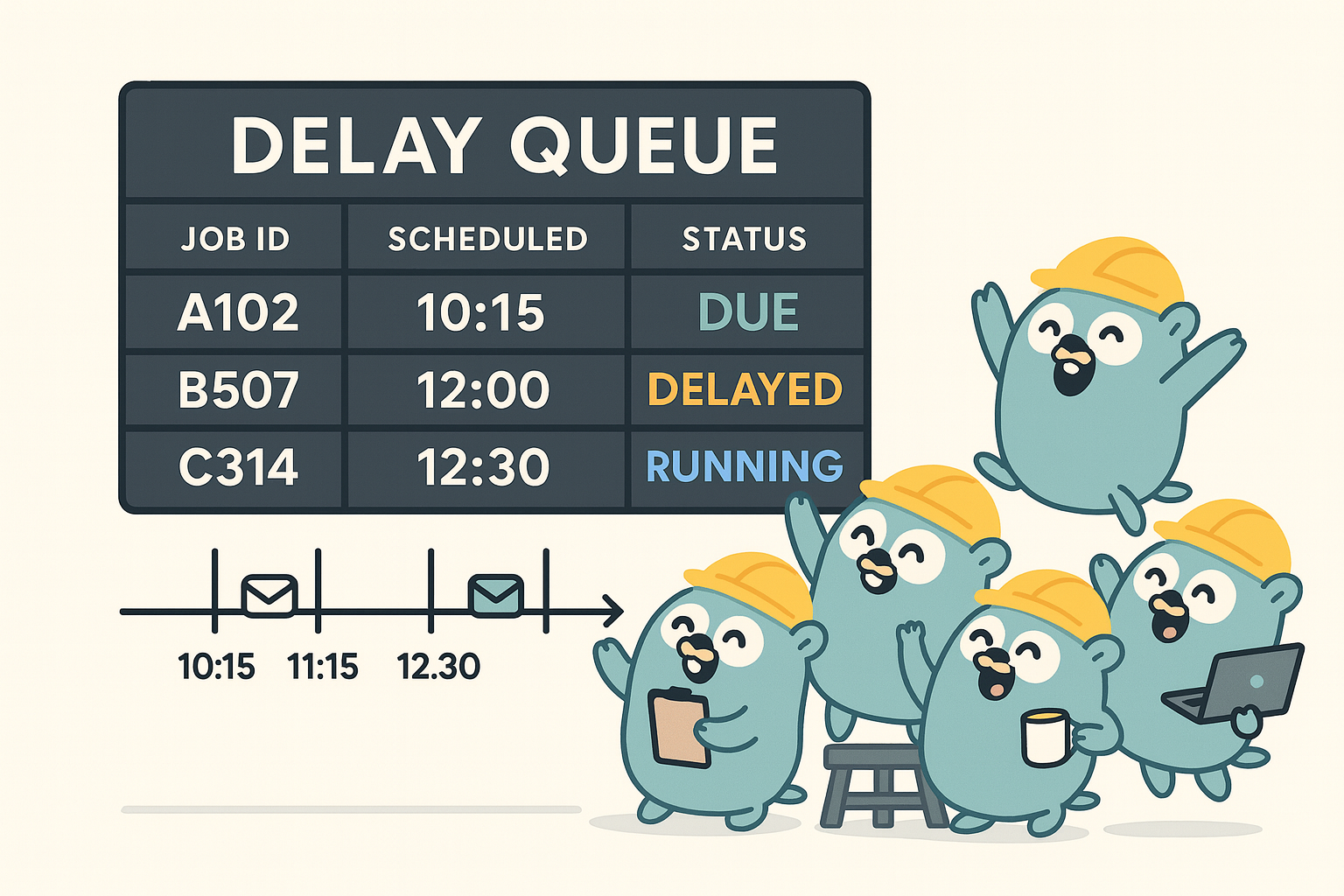
What is a delay queue? A delay queue holds a message/job until a specified delay time in the future, then makes it available for processing. It’s the simplest way to schedule “do this later” without blocking workers or rolling your own cron logic. Why use a delay queue? Retries with backoff — retry failed tasks after a delay. Scheduled tasks — run at specific times (e.g., reminder emails). Rate smoothing — spread out work to avoid thundering herds. When to choose what 1. Broker-based Delay Queues Built-in support for delayed messages in brokers. ...